Unlike traditional event betting platforms, the Gate Prediction Market introduces an on-chain prediction market ecosystem and is gradually integrating with leading on-chain platforms like Polymarket. This approach merges a centralized trading entry point with on-chain market liquidity, enabling everyday users to participate in global trending event trades without the need for complex on-chain operations.
With continuous enhancements in hot event aggregation, leaderboards, strategy tracking, and real-time trend systems, the competitive focus of prediction markets is shifting from “simple event trading” to “information discovery efficiency” and “market behavior analysis.”

Source: www.gate.com/prediction
What Is Gate Prediction Market?
Gate Prediction Market is fundamentally a market structure for trading on the outcomes of future events. Users can buy or sell based on a specific event’s result, with market prices dynamically adjusting according to trading activity and gradually forming a consensus on the event’s probability.
Unlike traditional financial markets—where stocks or futures represent the underlying asset—prediction markets trade on the likelihood of an event occurring. For instance, cryptocurrency prices, sports results, policy changes, trending news, and even social events can all become tradable topics in a prediction market.
Gate Prediction Market allows users to participate in event trading through a streamlined product interface, eliminating the need to manage complex on-chain processes directly. Compared to native on-chain prediction markets, this structure lowers the barrier to entry for mainstream users while preserving the core experience of fast-paced trading on trending events.
From an industry perspective, prediction markets are increasingly recognized as foundational “InfoFi” infrastructure—information financialization—where the core value lies in aggregating dispersed information and market expectations through price discovery.
Gate Prediction Market and the Polymarket Ecosystem
Polymarket is among the most prominent on-chain prediction markets, leveraging blockchain and stablecoin settlement to express the market’s views on future events via “price as probability.”
The collaboration between Gate Prediction Market and Polymarket exemplifies a “centralized entry + on-chain market structure” hybrid. Users can access trending events through familiar trading interfaces, while the underlying market structure connects with the on-chain prediction ecosystem.
This hybrid significantly reduces participation complexity compared to traditional on-chain workflows. Users no longer need to manage wallets, pay Gas, bridge assets, or handle on-chain order structures—making on-chain prediction markets far more accessible.
Polymarket’s market hotspots, event structures, and information flow also enhance Gate Prediction Market’s aggregation of trending events. This transformation is evolving prediction markets from basic “betting products” into real-time information marketplaces for trending topics.
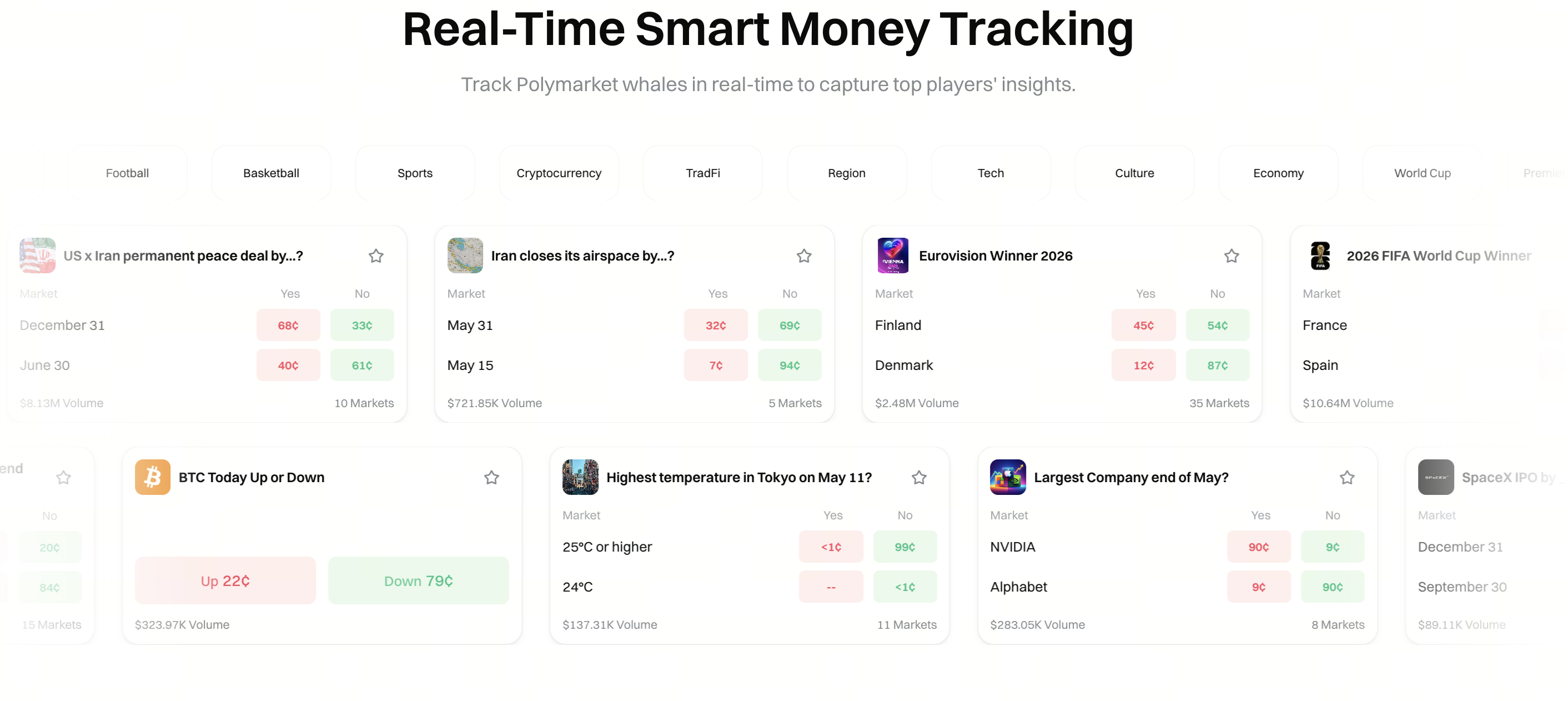
Source: www.gate.com/prediction
How On-Chain Prediction Markets Work
On-chain prediction markets are event trading systems built on blockchain, where “probability prices” are set by market trading activity. When an outcome’s price approaches 1, the market considers the event highly likely; when it nears 0, the consensus is that the event is unlikely. Thus, prediction markets are not merely betting tools—they financialize information, sentiment, and probability.
At their core, on-chain prediction markets use Smart Contracts to manage funds and settlements. Users participate using Stablecoins, and the system settles automatically based on event outcomes. Oracle mechanisms synchronize real-world results after the event, triggering final settlement. This reduces human intervention and enhances the verifiability and transparency of market outcomes.
Compared to traditional centralized prediction platforms, on-chain prediction markets prioritize transparency and non-custodial structures. Trades, asset flows, and order status are verifiable on-chain, removing reliance on platform databases. Their global and open nature makes on-chain prediction markets an increasingly important pillar of InfoFi in crypto.
However, native on-chain prediction markets can be daunting. Users must manage Wallets, pay Gas, bridge assets, and understand on-chain confirmations—steps that can be prohibitive for mainstream users. As a result, more platforms are introducing centralized entry points and simplified interfaces to lower the barrier to participation.
Hot Event Discovery and Trend Aggregation in Gate Prediction Market
Traditional prediction platforms use static categories, requiring users to search or browse lists to find opportunities. Next-generation prediction markets focus on “hot event discovery,” transforming the platform into an aggregator of information and trends. Gate Prediction Market is evolving by enhancing search, event aggregation, and real-time trend systems.
The upgraded search supports fuzzy keyword matching, result highlighting, and categorized recommendations for faster access to global trending events. Secondary categories like Recommended, Sports, and Crypto provide more granular browsing. Unlike rigid navigation menus, this structure improves market discovery and helps users quickly reach their preferred trading scenarios.
For hot event aggregation, the “Live & Hot” system continuously compiles trending trades, high-interest markets, and real-time trend shifts. Prediction markets are no longer just trading interfaces—they are becoming information feeds. Users can track market sentiment and event attention in real time, beyond merely trading.
Additional features—recent browsing, search history, and breaking events sections—further strengthen users’ ability to monitor trending topics. Prediction markets are evolving from simple “event trading tools” into dynamic entry points for hot event discovery, trend aggregation, and real-time information flow.
Leaderboards and Strategy Tracking in Gate Prediction Market
Beyond event trading, prediction markets are placing greater emphasis on “user behavior data” and “strategy tracking.” The new leaderboard system in Gate Prediction Market is a major upgrade, supporting PnL rankings, total trading volume, and highest profit leaderboards so users can easily identify top traders and high-performing accounts.
The leaderboards display not just returns, but also position value, trade volume, and overall PnL—expanding market observation from “event outcomes” to “user behavior structures.” Users are now tracking capital flows and strategy changes, not just event probabilities.
This strengthens the “strategy layer” in prediction markets. By following high-performing accounts, users can better understand shifts in sentiment, trending directions, and capital preferences. Unlike traditional platforms focused solely on event results, next-generation prediction markets prioritize market behavior analysis and strategy tracking.
Looking ahead, prediction markets may add features like Smart Money tags, whale indicators, PnL curves, and historical position trends. The result: prediction markets are evolving into composite platforms for “information trading + behavior analysis,” moving beyond simple event betting.
Lowering the On-Chain Participation Barrier with Gate Prediction Market
While on-chain prediction markets offer transparency, native on-chain participation is often complex. Traditional workflows require users to:
- Create a Wallet
- Manage a Private Key
- Make cross-chain Deposits
- Pay Gas
- Understand on-chain confirmation logic
For most users, these steps raise the bar to entry.
Gate Prediction Market simplifies this with a centralized account system. Users can join trending events directly via the Gate app or platform, using Account Assets to trade—no need for full native on-chain interaction.
The platform also introduces:
- Category browsing
- Quick Filter
- One-click Place Order
- History filtering
- Small record hiding
Sports prediction markets feature handicap betting, total score betting, and sliding score selection for enhanced gameplay efficiency.
This approach strikes a balance between “on-chain market structure” and “centralized product experience.”
Traditional prediction platforms are centralized: the platform creates events, manages odds, holds funds, and settles results. Users mainly participate in betting, with little insight into market structure or capital flows.
Next-generation prediction markets emphasize transparency and information value—market visibility, hot event aggregation, probability pricing, and user behavior analysis. By integrating with on-chain ecosystems and strengthening search, leaderboards, and trend aggregation, Gate Prediction Market upgrades prediction markets into comprehensive information and trading platforms with the attributes of a trending information hub, probability trading market, behavior analysis system, and real-time trend portal.
| Comparison Dimension |
Traditional Prediction Platform |
Next-Generation Prediction Market (Gate Example) |
Core Upgrade |
| Market Structure |
Centralized operation, platform fully managed |
On-chain + centralized hybrid, Smart Contract execution |
Transparency and trust significantly improved |
| User Role |
Passive betting |
Active trading and information participation |
Shift from gambler to information trader |
| Core Function |
Event betting and settlement |
Hot event aggregation + probability pricing + behavior analysis |
Both information platform and trading market attributes |
| Key Competition |
Number of events and prizes |
Speed of hot event discovery, efficiency of information aggregation, participation threshold |
Competition shifts to information efficiency and user experience |
Industry trends show that the future of prediction markets isn’t about “who has more events,” but about faster hot event discovery, more efficient information aggregation, lower participation barriers, and clearer presentation of market behavior.
Advantages, Limitations, and Potential Risks of Gate Prediction Market
Gate Prediction Market’s key advantage is its blend of open on-chain structure and the user-friendly interaction of centralized platforms. Users can access global trending events without the hurdles of complex on-chain operations.
Its hot event aggregation, leaderboards, and strategy tracking systems further enhance information discovery efficiency, transforming prediction markets from “event trading products” into “hot probability information markets.”
However, prediction markets carry risks. Event prices are influenced by liquidity, market sentiment, and information asymmetry, so they may not always reflect true probabilities.
On-chain prediction markets also face:
- Regulatory uncertainty
- Market manipulation risks
- Liquidity fluctuations
- Intense, short-term changes in trending events
For everyday users, understanding probability markets, managing positions, and avoiding emotional trading remain crucial for effective participation.
Summary
Gate Prediction Market represents a new structure for information trading, combining the on-chain prediction market ecosystem with a centralized product experience. By integrating with Polymarket and enhancing search, hot event aggregation, leaderboards, and strategy tracking, prediction markets are evolving from traditional betting platforms into real-time information infrastructure for trending topics.
As InfoFi, on-chain probability markets, and hot trading structures continue to mature, prediction markets may become not only event trading tools but also vital data gateways connecting market sentiment, trending information, and trading behavior.
FAQ
What is Gate Prediction Market?
Gate Prediction Market is a prediction market product that enables trading on the outcomes of future events, allowing users to express their outlook on future trends through event trading.
What is the relationship between Gate Prediction Market and Polymarket?
Gate Prediction Market is partially integrated with the Polymarket on-chain prediction market ecosystem, making it easier for users to participate in on-chain prediction markets via a centralized entry point.
Why do prices in on-chain prediction markets represent probabilities?
In prediction markets, result prices are generally interpreted as implied probabilities. For example, a price of 0.7 usually means the market believes the probability of the outcome is around 70%.
What are the core features of Gate Prediction Market?
Key features include trending event search, trend aggregation, leaderboards, strategy tracking, sports derivatives, and real-time hot event trading.
What risks are associated with prediction markets?
Prediction markets may face risks such as liquidity fluctuations, market manipulation, regulatory uncertainty, and prices that deviate from actual probabilities.