Users tend to focus on ETC tokens primarily because Ethereum Classic has remained committed to the Proof-of-Work (PoW) consensus mechanism, in contrast to Ethereum, which has shifted to Proof-of-Stake (PoS). To fully understand ETC’s role, it’s essential to examine how transaction fees, mining rewards, total supply, issuance schedule, and network security interact.
This topic covers multiple dimensions, including token properties, core functionality, fee structures, PoW mining, ecosystem liquidity, and value mechanisms.
What Is the ETC Token
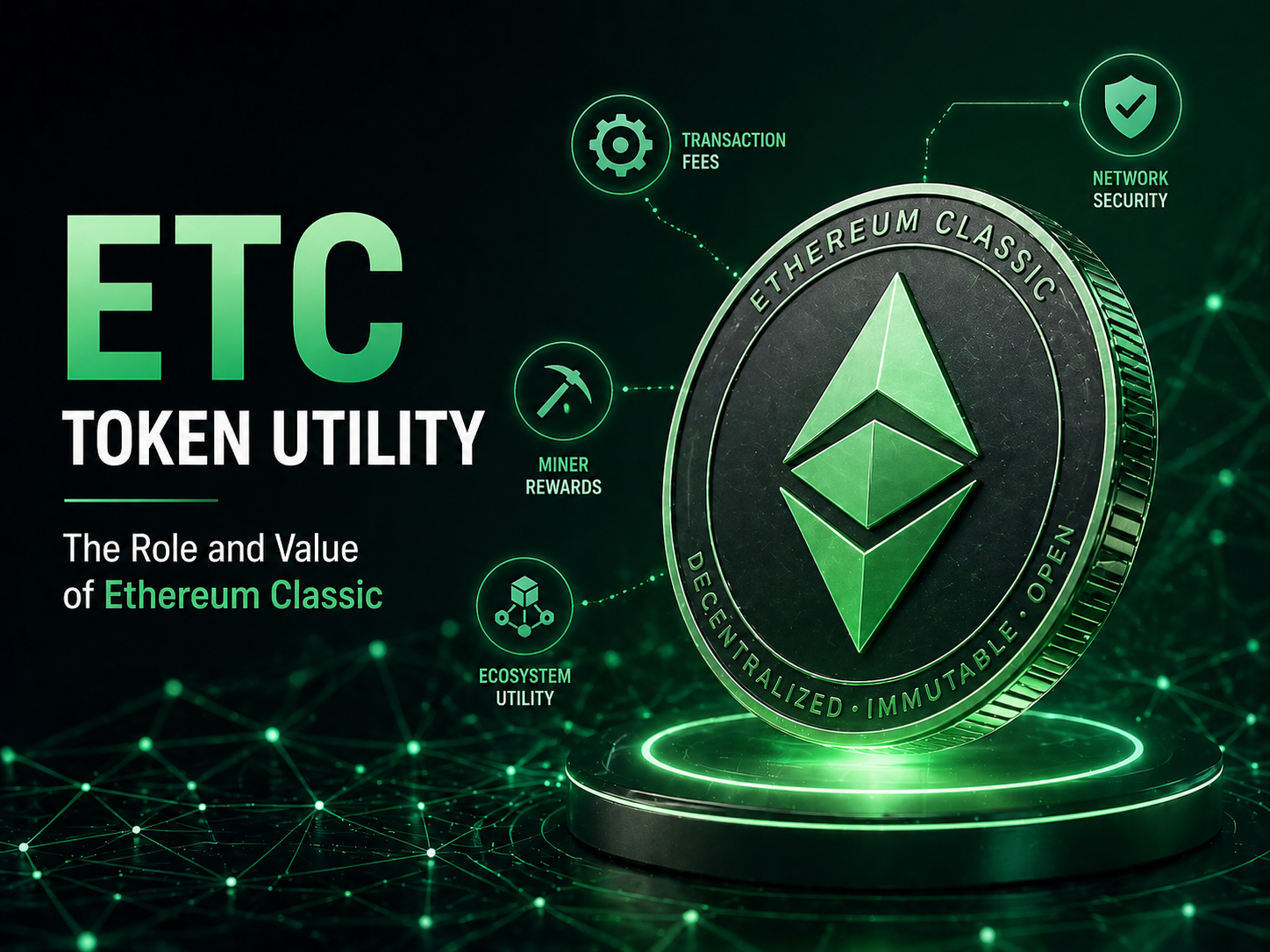
ETC is the native asset of the Ethereum Classic blockchain, serving as the means for paying network fees, incentivizing miners, and facilitating on-chain value transactions.
ETC is fundamentally linked to the operational framework of Ethereum Classic. Users must pay ETC as gas fees to send transactions or interact with smart contracts. Miners earn ETC by validating transactions and producing blocks. The network’s ledger integrity is protected via Proof-of-Work consensus.
ETC’s monetary policy enforces a fixed supply cap. Official Ethereum Classic resources indicate the maximum supply ranges from roughly 199 million to 210.7 million ETC, with 210.7 million being the most widely referenced limit.
This structure positions ETC not only as a medium of exchange, but also as a foundational asset directly tied to network security and long-term supply limits.
What Are ETC’s Core Functions
ETC’s core roles include fee payments, smart contract execution, miner incentives, and value storage.
On the transaction level, users must pay ETC as gas for transfers or contract interactions. For network security, miners take part in block production through PoW and receive ETC rewards. On the application level, ETC powers the execution of smart contracts and decentralized applications (dApps) on Ethereum Classic.
| Function Type |
Specific Role |
Network Impact |
| Fee Payments |
Covers transaction and contract execution costs |
Prevents resource abuse |
| Mining Rewards |
Incentivizes miners to produce blocks |
Secures the network |
| Contract Execution |
Facilitates EVM transaction computation |
Supports on-chain applications |
| Value Transfer |
Enables settlement and movement within the ecosystem |
Connects users and applications |
| Fixed Supply |
Caps long-term issuance |
Enhances expectations of scarcity |
ETC’s functions are interconnected, collectively forming a closed operational loop. Users pay network fees in ETC; miners are rewarded for securing the blockchain; and dApps drive ongoing token demand through contract execution.
This model establishes ETC as the base economic resource of the Ethereum Classic ecosystem.
ETC’s Role in Transactions and Fees
ETC’s primary transaction function is to serve as gas for network operations.
Every transfer and smart contract call on Ethereum Classic consumes computational resources, requiring users to pay ETC as a fee. The gas system assigns a cost to network resources, deterring spam transactions and malicious contracts from occupying block space.
From a user perspective, the ETC fee determines whether miners will prioritize a transaction. After submission, transactions enter the mempool, and miners select and package them based on fee rates and network conditions.
From a network perspective, the fee system provides supplemental miner revenue and maintains order in resource allocation. Without fees, attackers could flood the network with cheap, invalid transactions, reducing overall availability.
Thus, ETC’s fee role is dual: covering operational costs and defending the network against abuse.
How ETC Supports Network Security and Miner Incentives
ETC secures the network through the Proof-of-Work model, requiring miners to dedicate computational power to block production.
Ethereum Classic continues to use PoW with the ETChash algorithm. Miners compete to solve block hashes, earning both block rewards and transaction fees. In 2020, the ETC community implemented the Thanos upgrade, transitioning to ETChash to reduce DAG growth and foster broader miner participation.
ETC block rewards follow the “5M20” reduction model: rewards drop by 20% every 5 million blocks. This mechanism is designed to cap long-term supply and enforce a predictable monetary policy.
Mining incentives serve two main purposes: compensating miners for their operational costs and raising the computational cost of network attacks—thereby enhancing security.
This incentive structure directly ties ETC’s network security to miner participation, total hashrate, and the reward schedule.
How ETC Circulates in the Ecosystem
Within Ethereum Classic’s ecosystem, ETC circulates among users, miners, developers, and applications.
Users hold ETC in wallets, using it for transfers, gas payments, and contract interactions. Miners acquire ETC through block rewards and may use it to cover operational expenses or hold it as an asset. Developers drive ecosystem growth by deploying applications that attract user engagement and on-chain activity.
ETC circulates via three primary demand streams: asset transfers (transaction demand), contract execution (computation demand), and miner rewards (security demand).
This model means ETC is not merely an exchange-traded asset—it is an integral utility resource for network operations.
When transaction volume, contract deployment, and miner activity are robust, ETC’s circulation and utility within the ecosystem become even more significant.
How ETC’s Value Mechanism Shapes Network Dynamics
ETC’s value proposition is built on three pillars: fixed supply, declining block rewards, and the Proof-of-Work security model.
Ethereum Classic’s monetary policy, inspired by Bitcoin, features a near-fixed cap on issuance. Official sources confirm a supply limit of 199 million to 210.7 million ETC, with block rewards dropping by 20% every 5 million blocks.
Over time, ETC’s new issuance decreases as rewards are reduced. As of May 2024 (UTC), the fifth “5M20” era began, reducing block rewards to 2.048 ETC. Future eras will continue the 20% reduction pattern.
This value structure impacts the network in three ways: a fixed cap limits inflation uncertainty; declining rewards enhance long-term scarcity; and as rewards decrease, transaction fees and network demand must increasingly sustain miner incentives and security.
In summary, ETC’s value mechanism shapes both the supply structure and the long-term equilibrium of miner incentives and network security.
Summary
ETC tokens power the Ethereum Classic network by enabling fee payments, smart contract execution, miner incentives, and value transfers. Its monetary policy sets a near-fixed supply cap—commonly cited at 210.7 million—and reduces block rewards by 20% every 5 million blocks. Understanding ETC requires grasping how its PoW mining, gas fee system, and fixed supply work together to support the network.
FAQ
What Are ETC’s Main Uses
ETC is primarily used to pay transaction fees on the Ethereum Classic network, execute smart contracts, reward miners, and facilitate value transfer within the ecosystem.
What Is ETC’s Total Supply
According to Ethereum Classic’s official documentation, the ETC supply cap is between 199 million and 210.7 million, with 210.7 million being the most widely cited maximum.
Can ETC Still Be Mined
Yes. Ethereum Classic continues to use Proof-of-Work, allowing miners to earn ETC block rewards and transaction fees through the ETChash algorithm.
How Do ETC Block Rewards Change
ETC adopts the 5M20 model, reducing block rewards by 20% every 5 million blocks. This regulates long-term issuance and enforces the fixed supply schedule.
What’s the Difference Between ETC and ETH Token Mechanisms
ETC maintains PoW mining and a fixed supply model, while ETH has moved to PoS, featuring a different issuance and fee structure.







